

Aston Martin’s B-Spec AMR26: Promising, Painful and Unfinished in Hungary
Aug
The Aston Martin’s B-Spec AMR26 showed up at the Hungaroring with more hope than you’d expect from a team battling for 17th place. After ten rounds that Adrian Newey described as “a complete nightmare,” the team finally revealed the B-spec upgrade. This 16-part package had been teased for months as the real start of their 2026 season. After two days of practice, the results are mixed: the concept seems solid, the data matches expectations, but the car is still the second-slowest on the track.
The scale of Aston Martin’s B-Spec
It’s worth remembering how deep the deficit was before the parts arrived. Coming into Hungary, Aston Martin had averaged 4.670% off the pace across the season. The next-worst team was Cadillac — a brand-new outfit in its debut year — at 3.993%. At Spa the weekend before, the longest lap of the year and a merciless auditor of both chassis and power unit, Alonso and Stroll were cut adrift by roughly two seconds and sat more than four seconds off the Q1 benchmark.
Newey has been unusually open about the reasons. Serious work on the 2026 car began only in mid-March 2025, and a model did not reach the wind tunnel until mid-April, leaving them months behind other teams. He said the team was “relying on tools and processes that had been patched and bodged for years,” some dating back to the Jordan era. Choosing to skip smaller updates and focus everything on the Hungary package was, as he put it, “a painful decision,” because it meant making no progress for ten straight weekends.
What changed on Aston Martin’s B-Spec
The main talking point is the 16 new parts, but how they fit together is more important than the number. The chassis and gearbox design stayed the same, but both are now lighter. This weight reduction meant the team had to re-certify and crash test the front of the car. Newey said the goal is to get as close as possible to the weight limit. Since the team admitted the car was overweight, losing weight is a free way to gain lap time. Reducing weight simultaneously improves braking, cornering, traction, and tire wear.
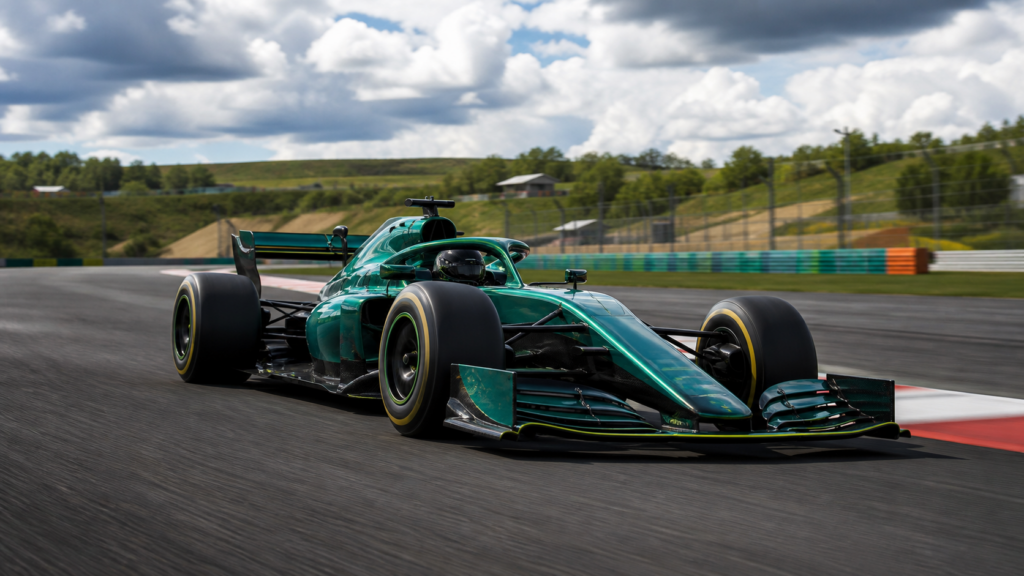
Aston Martin’s B-Spec aerodynamics have been heavily revised. It now has a longer, thinner nose and a reshaped front wing with new endplates. The design uses a different loading approach, replacing the V-section near the front tire with a crowned shape. The goal seems to be smoother airflow behind the wing, which should make the car less affected by wind and turbulence. This is important because the original version had problems with the front wing separating the airflow.
Four of the updates focus on the floor to increase downforce: changes to the floor body, leading-edge vanes, and the area ahead of the rear tire. The bargeboards are now lower and less aggressive at the back. The sidepod inlet has been reshaped and made slightly smaller on the inside, likely to feed a more aggressive double-floor setup. This aims to push more air to the diffuser, beam wing, and rear wing together. The engine cover and cooling outlets have also changed, now with fewer but larger louvers.
The biggest mechanical change on Aston Martin’s B-Spec is at the rear of the car. The front suspension, including the anti-dive setup that some questioned in January, has not changed. The rear suspension geometry is new, with the rear leg’s inboard attachment, which is mounted on the rear wing pillars, moved higher. This should help prevent rear lift, reduce camber changes at different speeds, and raise the rear roll center. To prevent flexing from the higher mount, Aston Martin added a small horizontal strut between the pillars.
Friday: the failure
Then Lance Stroll’s session ended after 36 minutes. His left-rear suspension appeared to buckle on the exit of Turn 2, spinning him through 360 degrees and bringing out a red flag.
Newey was clear in his response: “The area involved was actually not being changed.” The team was still investigating hours later, but said it was not caused by the upgrade itself. However, the upgrade led to the situation. Because Aston Martin rushed to get the new package ready before the summer break, they had almost no spare parts. The new car’s cladding and hardware are different, so they could not make a quick repair. As a result, Stroll missed all of FP2 and did not set a time.
“We’ve lost a lot of track time with that,” said team representative Pedro de la Rosa. “But also Lance has lost a lot of track time, because it’s just a new feeling, a different characteristic to drive this car. It’s not only about adapting the set-up, but also the drivers to this car.” Parts were flown out from Silverstone overnight so both cars could run the full package on Saturday.
Another problem for Aston Martin’s B-Spec was the return of loud vibrations on the main straight, which were visible on both drivers’ onboards in FP1. This was a reminder of the issues that hurt the team earlier in the season. Honda’s Shintaro Orihara said they understood the cause, which was different from before, and that they adjusted their solutions during the practice sessions.
Aston Martin’s B-Spec on the timing sheets
Alonso ran 13th in FP1, 2.475s off Leclerc’s benchmark — 3.123% adrift, down from 4.670%. In FP2, he was classified 19th, though his quickest lap was deleted for track limits; it would have placed him 17th, ahead of cars he’d been more than 2 seconds behind at Spa. In FP3, he ran as high as 11th mid-session before the track came to him and he didn’t respond, finishing 17th at +2.454s. Stroll, on his first real laps in the car, was 18th at +2.994s.
Friday’s sector analysis tells the real story of Aston Martin’s B-Spec: Aston Martin was the slowest team in the first sector, but ranked seventh in sectors two and three. The car performs well in corners, but struggles on the straights. That is exactly what Honda’s upcoming engine upgrade at Zandvoort is supposed to fix.
Where this leaves them
Alonso’s reading of Aston Martin’s B-Spec was measured. “We had what we expected in terms of numbers and correlation, which is obviously very encouraging for the future.” He believes there’s no big cornering deficit to the top of the midfield now, but it was clear this is the first step of many.
Newey framed Aston Martin’s B-Spec the same way. Hungary is phase one; Zandvoort brings phase two alongside Honda’s only engine upgrade of the year; a third chassis step follows at Monza or Baku. “Is it going to make us the quickest car? Unfortunately, not. Does it represent a good step forward? Yes.”
For Aston Martin’s B-Spec, the realistic goal remains modest. As Gary Anderson said, the realistic goal is to move ahead of Cadillac, maybe Williams, and possibly Haas. It is a modest aim, but for a team that wants “respectability” and needs to persuade Fernando Alonso to stay for 2027, a Friday that ended with a broken car and missing spare parts still counts as progress. Just barely.
To compare Aston Martin’s B-Spec with the team’s own assessment, read the official Hungarian Grand Prix update. For more race analysis, explore Mr DCT’s Formula One coverage.
